- Wine Tour Destinations
If you are wondering where Burgundy is located, we are here to help! Burgundy’s wine region stretches across a vast area of eastern France, encompassing Chablis, the Côte d’Or, the Côte Chalonnaise, and the Mâconnais. Its finest wines are produced in the Côte d’Or, which is divided into around 25 villages, or communes.
The northern section, known as the Côte de Nuits, extends from Marsannay to Corgoloin and centres on the town of Nuits-Saint-Georges. Further south, the Côte de Beaune is organised around the larger town of Beaune and includes villages ranging from Ladoix-Serrigny to Santenay.
Dijon is the historical capital of Burgundy, which began as a Roman settlement. It was home to the Dukes of Burgundy from the early eleventh Century until the late 1400s, and was a place of great wealth and power during this time.
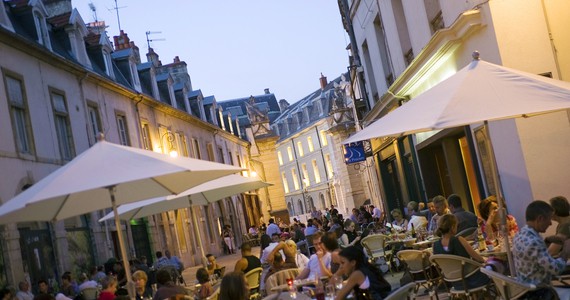
The city’s patron saint, Saint Benignus, is said to have introduced Christianity to the area. As a result,you will find many impressive places of worship, such as Notre Dame de Dijon and Dijon Cathedral. Underneath the Dijon Cathedral, you will find the historic and intriguing crypt, which is a must see.
The city centre is one of the best preserved in France, housing buildings over 200 years old. Dijon’s architecture is epitomised by the Burgundian roofs, which are glazed with geometric terracotta, green, yellow, and black patterns.
As one of the former great European centres of art, learning, and science, the city boasts numerous fascinating museums such as the Musée des Beaux Arts and the Musée Magnin. In addition to the excellent restaurants and shops, don’t miss the impressive ducal palace, once a home to the Dukes of the region.
Beaune, located in the Cote d’Or department, is considered as the wine capital of the Burgundy region.
The city is surrounded by the vineyards of prestigious appellations. It is famous for the Hospices de Beaune, one of the country’s most historic buildings. Founded in 1443, after a long period of wars and diseases, the Hospices were built as a hospital for the poor. The creator of this unique building, Nicolas Rolin, included surrounding vineyards, farms, and woods to ensure its self-sufficiency.
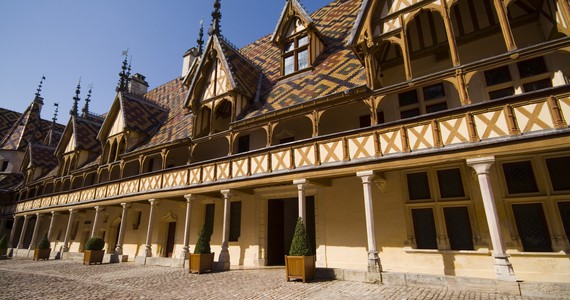
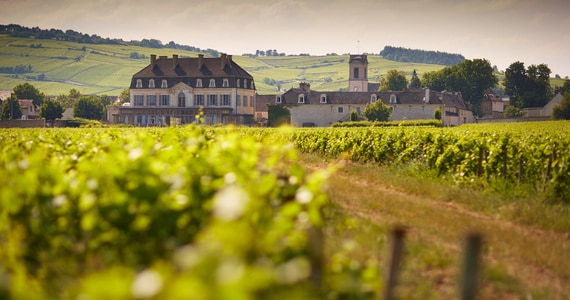
Today the vineyards of the Hospices represent about 60 hectares, planted mostly with Pinot Noir grapes. About ten hectares of the 60 are dedicated to Chardonnay grapes. Every year, a charity auction sale is organised at the Hospices, where a large amount of the wines produced in the Hospices vineyards are sold. The money is then used to improve, preserve, and restore this amazing building.
Other sites of interest include the Burgundy Wine Museum, the old washing place on the river, and the Bouzaise Park. Beaune is conveniently located to surrounding sub-regions, sitting half an hour away from Dijon by car, an hour away from Macon, and an hour and a half away from Lyon.
Chablis is a popular visit within the Burgundy region, famous for its wine, bearing the same name. The Chablis wine is widely used in the local gastronomy, notably as an ingredient in recipes such as Snails in Chablis, Sole with Chablis, Chicken in Chablis, Ham à la Chablisienne, or again Rabbit in Chablis.
Local delicacies include the Andouillette of Chablis, the Duché biscuits, the Piliers de Chablis chocolates as well as the cake le Chablisien.
The town has some lovely medieval houses as well as two quaint churches, Saint-Pierre and Saint-Martin. Saint-Martin is a roman-style church dating back to the 13th century. Another sight of interest is the lavoir, the ancient washing place, and the Porte Noel with its tower built in 1775 and 1778 as well as la Tour Mirau d’Aval, reminders of the walls which once encircled the town.
Puligny-Montrachet is a small town located in the Côte de Beaune area in the Burgundy region between Dijon and Macon.
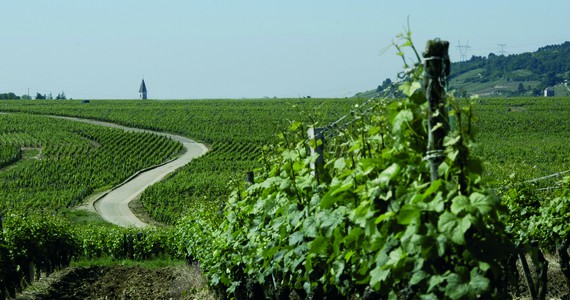
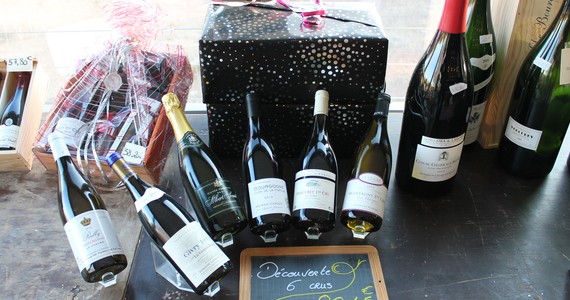
The wine of the appellation Puligny-Montrachet, praised by Thomas Jefferson and Alexandre Dumas, is produced there and the town is surrounded by breathtaking vineyards. This is the ideal place to enjoy long relaxing walks in the countryside.
At the heart of the Côte de Nuits, Vosne-Romanée produces excellent wines exclusively from Pinot Noir, renowned for being the world’s most expensive wines.
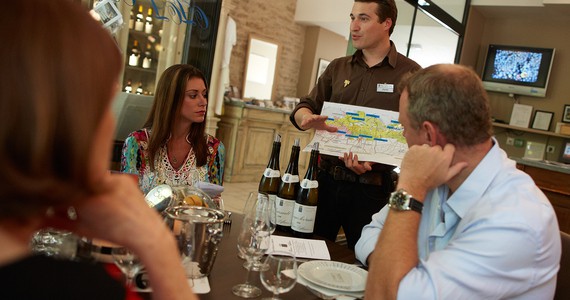
Everything ran like clockwork - everything you promised to deliver was delivered.
Louise- Cumbernauld, UK